

KRA compliance
Keep KRA compliance beside your billing — not in a spreadsheet.
Submission queues, tax profiles, and audit history live next to billing — so compliance is part of operations, not a month-end scramble.
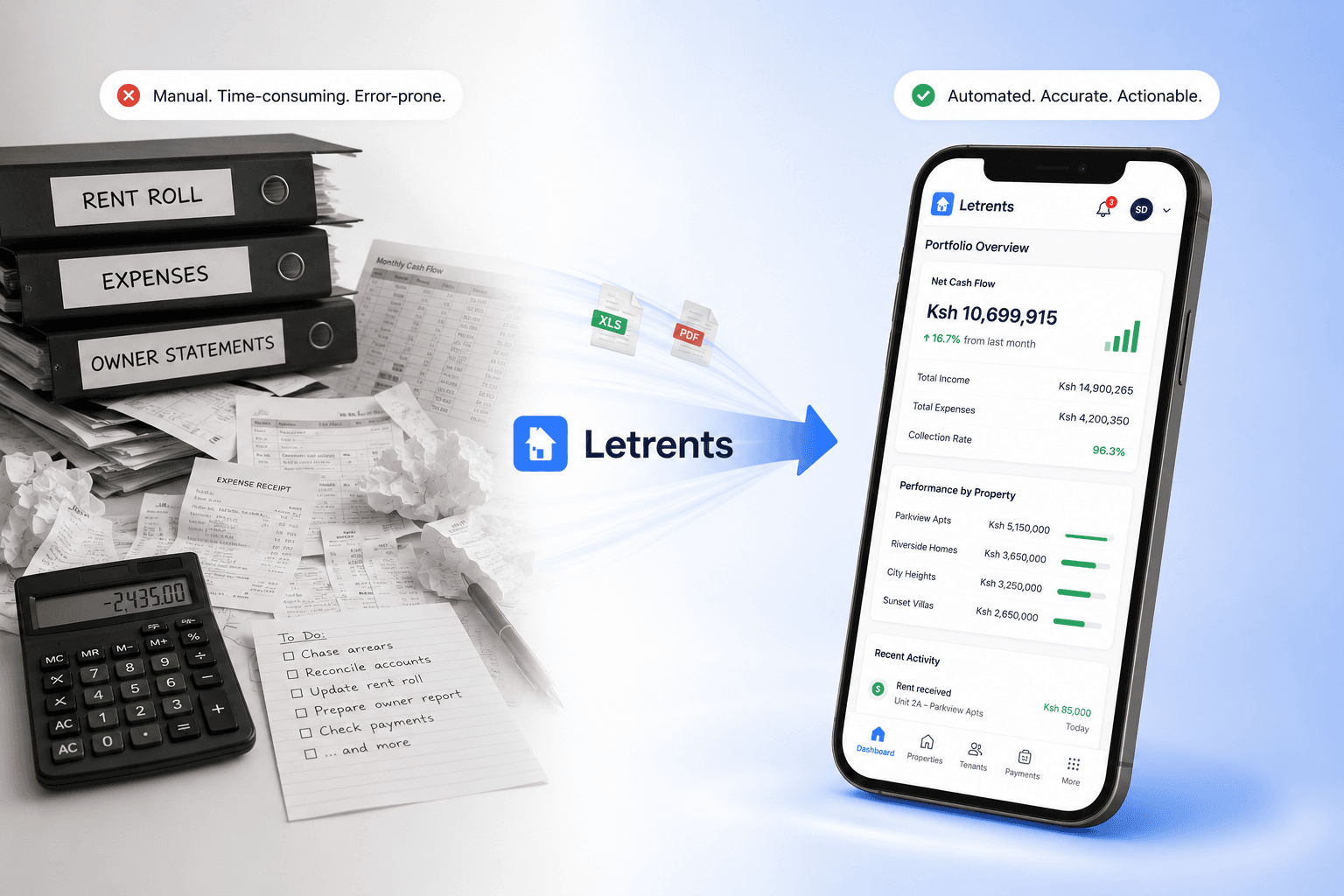
In LETRENTS
Built into your daily operations
LETRENTS Compliance keeps eTIMS submissions, tax profiles, credit notes, and audit history beside billing — so KRA workflows stay organized as part of operations, not a separate scramble.
Your workflow
From invoice to submission to audit-ready record
Peace of mind comes from process — not from hoping nobody asks questions later.
- 1
Issue invoices from your live billing workflow
Rent and charge invoices are created from tenant and lease data already in LETRENTS — so tax records start from operational truth.
- 2
Submit to KRA from the same workspace
eTIMS submissions move through a queue with status visibility, so your team knows what was sent and what still needs action.
- 3
Handle rejections and credit notes without panic
Failed submissions and corrections are managed beside the original invoice with history attached — not in a separate manual tracker.
- 4
Keep an audit trail you can actually use
Submission events, profile settings, and correction history stay on record when owners, accountants, or auditors ask for proof.
What changes
Results your team can feel
Reduce last-minute KRA scrambles
Submissions and statuses are visible throughout the month — not discovered in a rush before deadlines.
Stay audit-ready without extra admin layers
Invoice, submission, and correction history live in one workspace your team already uses for billing.
Handle rejections faster
Failed submissions surface early with context, so corrections happen while records are still fresh.
Frequently asked questions
Common questions about tax compliance.
LETRENTS Compliance supports eTIMS submission workflows, tax profile management, rejection handling, credit notes, and audit history — integrated beside billing and tenant records.
Related features
Ready to see this feature in action?
Keep submissions, corrections, and audit history where your billing already lives — and stop treating compliance like a separate emergency.